
Brand Trends: Mission-Driven to Commodity
Consumers’ attitudes towards brands are shifting from mission-driven to transactional. How should brands react?
Intro
There’s a shift in branding and how consumers relate to brands, driven by factors like demographics, social media, politics, and culture.
Before I dive in, Hi. I’m a brand strategist who has worked with more than 85 brands, including grassroots, nonprofit, consumer, B2B, and multinationals to build their brands, communities, and products.
For much of the 2010s, purpose-driven or mission-driven branding was absolutely pervasive. Many of my clients were mission-driven, and my advice was usually that branding is about creating a community, a group identity, built on a greater purpose or cause. When you could move your brand beyond emotional and functional benefits, into benefits like affiliation, belonging, and self-transcendence, you could build deeper brand loyalty and passion (see the graphic below).
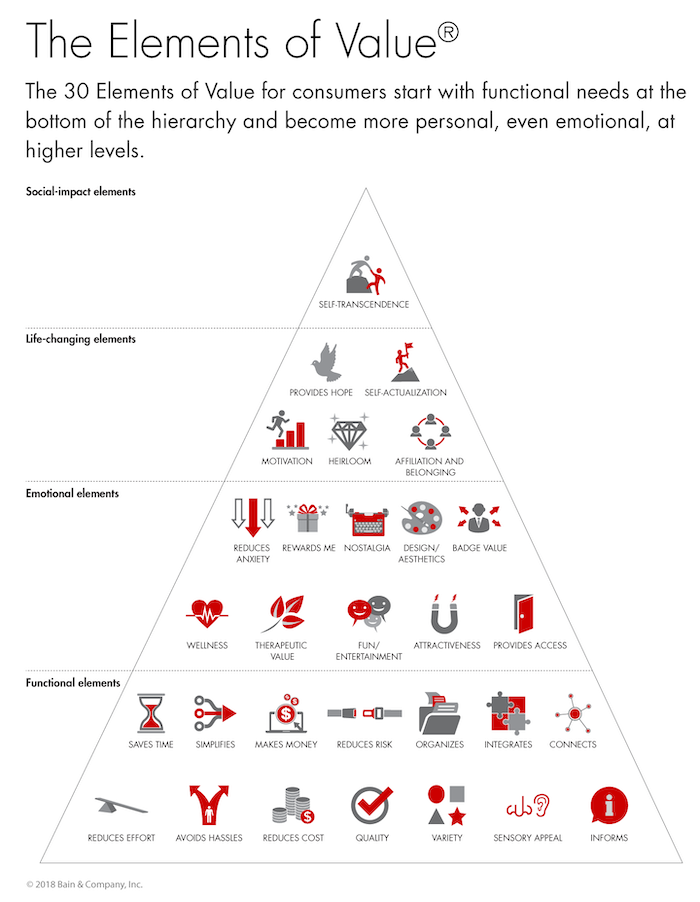
Brands like Patagonia, Nike, Warby Parker, Toms, and Ben & Jerry’s were often held up as examples of the pinnacle of branding: companies that didn’t just sell a product, they sold meaning. By buying their product, you were voting with your dollar about how the world should be, about who you were. People weren’t just customers, they were advocates, supporters, believers.
Every brand project started with a mission and vision statement. The reason the brand existed, and the cause they pursued, were foundational elements of the brand. Visual identity, advertising, and experiences came out of mission and vision.
It was all very in-line with the times: the reelection of Barack Obama, millennials coming of age as conscious consumers, movements around climate change and Occupy Wall Street on front pages (also front pages existing or being a relevant term!). Facebook, Uber, and Twitter were going to change the world for the better. Google’s motto was “Don’t be evil.”
Now let’s jump ahead to today.
Brands in 2026
I want to start with the controversy du jour in branding, Patagonia vs. Pattie Gonia. The first time I heard about this controversy, it was being used as an example of how goodwill from brands seems to be meaningless: if Patagonia of all brands, with its decades of activism, action, and impact — if Patagonia can be turned on by the internet mob so quickly, then why should brands be purpose-driven at all? Was all that goodwill meaningless? Are consumers so cynical that even a brand like Patagonia doesn’t have credibility?
A bit of background: Patagonia is suing the environmental and LGBTQ+ activist and drag queen Pattie Gonia (get it?) for copyright infringement. They had reached an agreement that Pattie wouldn’t infringe on Patagonia’s trademark rights, but when Pattie Gonia began selling merch with very similar branding, Patagonia intervened and eventually sued for $1. Now from a legal perspective, Patagonia absolutely has to take this action to defend their trademark. By not defending your trademark every time, you open it up to anyone using it. The $1 was clearly meant to be a brand move to protect their reputation (and be true to their mission by not using trademark defense to ruin a values-aligned activist). But the optics of a large company, even a benevolent one, suing an activist have not been favorable to the social media mob – just try explaining trademark law to an internet comment thread.
To be clear, I don’t think Patagonia is abandoning its mission or acting in opposition to it. I think it’s a great company. If every company acted like they do, the world would be a better place. And I think they are true to their mission, it’s not PR, it’s authentic and meaningful.
But I do think there is a larger trend of brands abandoning mission and purpose. Google removed “Don’t be evil.” Facebook is Meta, Twitter is X, Allbirds is AI, and Shein bought Everlane. The examples go on and on. That aligns with consumers treating brands more like commodities, or sometimes even villains.
What’s driving this? Well, a lot. I’m not a sociologist, and this question has been answered before. But my view is that it’s demographics (Gen Z replacing Millennials as the focus of many brands), cultural and political change in the U.S., and just the reality of a social media ecosystem that rewards outrage, controversy, and conflict. Consumers, especially Gen Z, have grown more cynical of brands making purpose-driven claims, and they’ve seen enough examples of corporate hypocrisy and greenwashing to have less tolerance for a fake mission-driven brand than, for example, a Shein which is transparently not environmentally-friendly.
So what’s a brand to do?
Some of my advice would be at home in 2011, while some of it has changed. Brands change, branding changes, and brands need to adapt to the culture and consumers they exist within.
Branding has become more transactional. In a time of economic, social, and existential uncertainty, consumers are looking for value and benefit. The needs on the pyramid have shifted lower. It’s nice to care about self-transcendence, but sometimes we just need a bargain. What’s in it for me? A brand has to be relentlessly focused on their audience and their experience.
Authenticity is still important. Maybe more important than ever. Corporate greenwashing, brand as a PR exercise — you’re better off being transparently imperfect than over-promising on your goodness. Don’t BS consumers. If you claim a mission, commit to it. And understand the risks. Which brings us to our next point…
Don’t fight the mob. Unfortunately, the social media algorithm isn’t going anywhere soon. Controversy, conflict, and criticism are rewarded. But you have to separate the absolutist, extreme rhetoric of the comments thread from the reality. Patagonia will be fine. Their excellent products, quality, and customer experience haven’t changed. The goodwill is intact, except with the chronically-online, which is actually a small segment of the population. And social media comments don’t always translate to purchasing behavior. The actual consumers who care about this controversy will be small, the behavior that changes will be smaller, and consumers will continue to choose the product that benefits them.
Build a consumer-focused brand. When building a brand, instead of starting with mission and vision, I would start with a unique value proposition (UVP) and positioning statement. What do you offer, to whom, and why does it matter to them. Centering that for the brand — and building around that emotional, psychological, and transactional experience — is smarter for today’s consumers than a mission-driven brand. Now, as an inhabitant of Earth, I’d also like brands to be good corporate citizens and behave ethically. But branding is the art of articulating who you are in the minds of consumers, and I believe an experience-focused brand is more effective in today's market.
Saturation means interaction rules. Media messaging is more saturated than ever. Content is shorter, usage is up, platforms are fragmented. People are spending more time seeing more content in more places. So your “purpose-driven brand” message is going to be drowned out more than ever before. That means the experience consumers have with your brand is more important than the claims you make. The emotional, functional, psychological, and lived benefits of a brand experience are what matter to your consumers. Good product, good design, good UX, good customer service, good policy, good value. For consumers, that will make you a good brand.
Conversation is important, but not everything. Participate in conversations transparently and authentically. Brands like Wendy’s, Duolingo, and Chipotle have done a great job of jumping into conversations and not speaking like corporate lawyers. Recognize that you can’t control the narrative around your brand — and the higher your profile, the more you will be called out and criticized. But also realize that social media is the margins, and focus on your core consumers and making them happy to inoculate your brand a bit.
We’ll continue to keep an eye on mission-driven vs. commodity branding, and see how consumers’ attitudes evolve and brands adapt.
